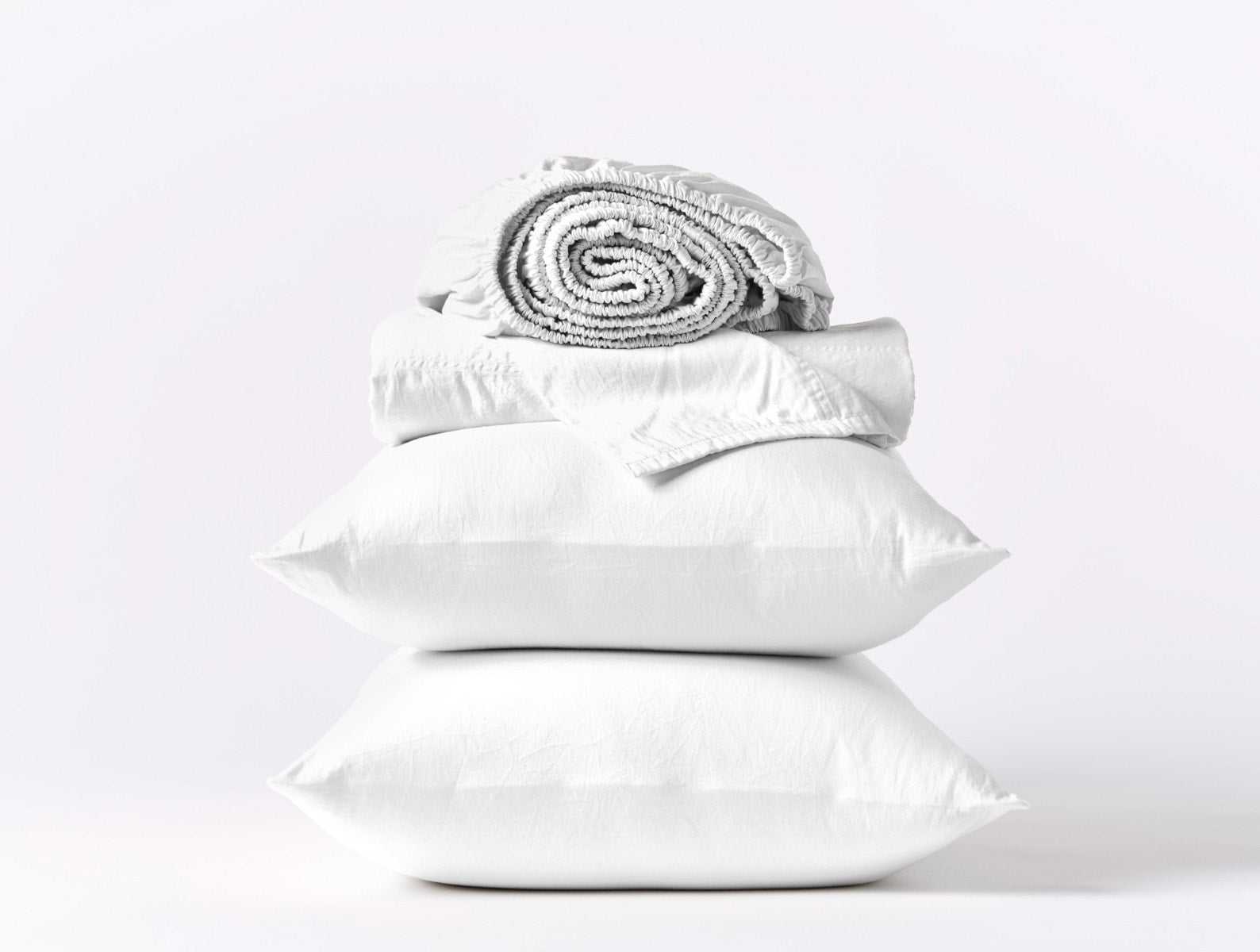
Hospitality Bedding · Field Guide
Duvet Cover Construction: Closures, Fabric, and Care for Busy Rooms
A duvet cover is both the quiet finishing layer of a well-made bed and a hard-working part of a hotel’s linen system. Its fabric, closure, seams, and care requirements affect the guest experience, the pace of room turnover, and the life of the duvet beneath it. A considered choice looks effortless; behind that ease is a set of details worth specifying.
For rooms that are cleaned and reset frequently, the best cover is not simply the softest or most decorative. It is the one that fits the insert, can be changed reliably, presents neatly, and performs well under the property’s actual laundering routine.
A polished bed begins with a practical layer
A duvet cover protects the insert from direct contact and everyday wear while giving the bed its visible finish. That double role makes construction more than a specification on a purchasing sheet. A cover that is difficult to close can slow a room reset; a poor fit can leave the duvet bunched or exposed; a fabric that does not suit the laundry process can lose its crisp appearance sooner than expected.
In hospitality, those details multiply across rooms. A small inconvenience repeated many times becomes a workflow issue, while a durable, familiar design can make both presentation and linen handling more consistent. The aim is not to chase a single definition of luxury, but to choose a combination of texture, ease, and longevity that suits the property’s standards.
Start by treating the cover as part of a system. The insert, mattress, bed-making method, staffing pattern, laundry equipment, and desired room aesthetic all matter. A closure that is excellent for one operation may be less convenient for another. A supple fabric that feels beautiful in a small inn may need a different care process from a cover used in a high-turnover property. Specifications should answer how the linen will actually be used.
Closure styles: the small detail that changes the routine
The closure sits at the edge of the cover, out of sight once the bed is made, but it has an outsized effect on changing time and security. Common options include buttons, zippers, ties, and envelope-style openings. Each creates a different balance of speed, durability, appearance, and ease of repair.
Buttons: familiar and straightforward to service
Button closures are easy to understand and can be replaced individually when a button is lost, provided suitable replacements and basic repair capacity are available. They may also suit a classic or tailored design, especially when the closure is discreetly placed at the foot of the bed. The trade-off is the time required to fasten each button, along with the possibility of a button loosening, breaking, or catching during handling.
When assessing buttoned duvet covers, inspect the button spacing, buttonhole finish, and reinforcement around the placket. Very wide spacing can allow the insert to shift or show through; delicate stitching may be vulnerable to repeated opening and closing. Staff should be able to fasten the closure without forcing the fabric, since strain at a buttonhole can become a recurring point of damage.
Zippers: quick closure, careful inspection
A zipper can make it fast to secure a cover along a long opening, helping keep the duvet enclosed during bed-making and use. Its performance depends on the quality of the zipper, the protection of its ends, and how smoothly it operates. A snagging slider or a separated coil can turn a quick task into a repair or replacement decision.
Consider whether the zipper is concealed or covered by a fabric flap, and whether its placement is comfortable for the person changing the bed. Check that the slider can be reached easily, that the teeth lie flat when closed, and that no sharp edge is exposed. Routine inspection matters: staff should not pull aggressively on a jammed closure, as force can damage both the zipper and the surrounding seam.
Ties: flexible fastening with more handling
Fabric ties or internal corner ties can help anchor an insert within the cover. They are useful when the duvet tends to migrate, but tying and untying adds steps to each change. The ties themselves need secure stitching, appropriate length, and a clear method of attachment. If they are too short, difficult to reach, or prone to tearing free, the intended benefit disappears.
For operations considering ties, the practical question is whether the bed-making routine allows enough time to secure them consistently. A concise procedure can help avoid uneven knots or missed corners. If ties are used alongside another closure, record both features on the specification sheet so replacement covers match the established routine.
Envelope openings: simple design, specific fit needs
An envelope-style opening uses overlapping fabric rather than a separate fastening. With fewer closure components, there are fewer buttons or zipper parts to inspect. The overlap must be generous enough to keep the insert covered and positioned, however, and the opening should be compatible with the insert dimensions and the way the bed is made.
Test the opening with the actual duvet insert rather than relying on nominal size alone. If the cover is stretched too tightly, the overlap may not hold as intended. If it is excessively roomy, the insert may shift inside. A discreet closure can contribute to a clean finish, but the finished bed still needs to stay composed through normal use.
Fabric and weave: comfort is a matter of context
Fiber content tells only part of the story. Weave, yarn quality, fabric weight, finishing, and construction all shape how a duvet cover feels and behaves. Cotton is widely used for its familiar hand and laundering versatility, but cotton covers can feel notably different depending on their weave. Linen offers a more textured surface and a relaxed character; blends may be selected for particular performance or care priorities. Always evaluate the specific fabric rather than assuming that a fiber name alone guarantees a certain result.
Percale for a crisp, matte impression
Percale is commonly associated with a cool, crisp hand and a matte appearance. Its structured look can suit a clean, freshly made bed, and it may appeal to guests who prefer a lighter-feeling surface. The word “percale” describes a weave, not a complete quality grade. Fiber, yarn, finishing, and laundering still influence the finished cloth.
Sateen for a smoother drape
Sateen typically has a smoother hand and a subtle sheen that gives the bed a softer, more flowing appearance. It may be a strong fit for properties seeking a more polished or enveloping look. The visual effect should be balanced against the practical realities of frequent handling: compare how the fabric looks after laundering, how it responds to pressing or finishing, and whether its surface remains suitable for the property’s presentation standards.
Linen and other textures
Linen is valued for its distinctive texture and easy, lived-in elegance. It can bring a relaxed atmosphere to a room, but its characteristic creasing is part of the look and should be considered alongside the desired bed presentation. Other fabrics and blends may offer a different balance of drape, weight, and maintenance. Samples are especially useful when a particular hand feel or finished appearance is central to the guest experience.
Weight, breathability, and the guest-facing feel
Fabric weight influences drape and the impression of substance, but heavier is not automatically better. A cover needs to work with the duvet insert, room climate, and laundry equipment. Consider how the fabric feels against skin, how it handles warmth, and whether it dries within the operation’s usual cycle. A tightly woven, substantial fabric may offer a very different experience from a lighter, airier one, even when both are made from the same fiber.
Where possible, assess a laundered sample rather than a new one straight from its packaging. Repeated washing can change the hand, appearance, and dimensions of textile products. A trial also helps teams judge how easily the cover folds, how it sits over the insert, and whether its finish matches the intended room style.
Seams, hems, and finishing: durability is built at the edges
Seams and edges are high-contact areas. They are pulled during insertion, handled during laundering, and adjusted while the bed is made. Consistent stitching and well-finished hems help a cover maintain its shape and present neatly. Reinforcement at stress points is particularly worth reviewing around closures, corner ties, and opening edges.
Ask suppliers for construction details where available, then inspect samples under ordinary handling. Look for straight, even stitching; secure seam allowances; tidy thread ends; and a closure that sits flat rather than puckering the fabric. Decorative embroidery, piping, or contrast trims can add distinction, but they should be assessed for comfort, durability, and compatibility with the care process.
Measurements are just as consequential as finish. Record the duvet insert’s dimensions and compare them with the cover’s finished dimensions. A cover that is too small can strain seams and make insertion awkward. One that is too large may allow the insert to migrate, leaving the bed less even. Because sizing conventions and finished measurements can vary, verify dimensions rather than purchasing on a size name alone.
Laundering and care for a high-turnover linen system
Care instructions should be considered before a duvet cover enters the inventory. The right routine depends on the fabric, finishing, closures, laundry equipment, detergents, water conditions, and supplier guidance. There is no single washing temperature or drying method suitable for every cover. Follow the product’s care label and test the intended process before standardizing it across a property.
For covers with zippers, close the zipper before washing if the care guidance permits; this can help prevent the slider from catching on other textiles. For buttons or ties, check that fastenings are secured as directed and that loose components are identified before processing. Avoid treating a delicate trim as an afterthought: decorative details may call for a different handling approach from plain commercial linen.
Overloading laundry equipment can affect cleaning, rinsing, drying, and finishing. A cover needs enough space to move through the process appropriate to the textile. Separate items according to the operation’s established sorting rules, and avoid mixing materials that require incompatible care. If a new fabric behaves differently in drying or finishing, document the change and update the team’s process rather than relying on informal workarounds.
Remove covers from the dryer or finishing process according to the care instructions and the property’s workflow. Prompt handling can help reduce unnecessary creasing in some fabrics, while pressing or steaming may be appropriate for others. The goal is a consistent, clean presentation without subjecting textiles to avoidable heat, friction, or chemical exposure.
Routine inspection should accompany laundering. Note fraying seams, weakened corners, damaged closures, discoloration, persistent stains, and changes in fit. A clear standard for repair, continued use, or retirement makes decisions more consistent. Where the property tracks linen turns, recording defects by item or batch can reveal whether a problem is isolated or linked to a particular specification or care step.
A practical selection checklist
A simple duvet cover data sheet can turn purchasing and replacement into a more orderly process. Keep the record concise enough to use during receiving, room setup, and inspection, but detailed enough to distinguish one approved cover from another.
- Dimensions: Record the finished cover measurements and the compatible duvet insert size. Confirm fit using the actual insert when possible.
- Closure type: Identify buttons, zipper, ties, envelope opening, or a combination. Note closure placement and any special handling directions.
- Fiber content: Record the stated composition, including any blend, so the care plan and purchasing record remain accurate.
- Weave and fabric weight: Note the weave and weight if supplied, together with a brief description of the desired hand and appearance.
- Seams and finishing: Document hems, reinforced points, trims, corner ties, and other construction features relevant to inspection or repair.
- Care instructions: Transcribe the manufacturer’s guidance for washing, drying, ironing, and any restrictions. Avoid substituting a generic rule for the label.
- Presentation standard: Describe the approved finished appearance, such as a crisp matte surface, a relaxed texture, or a specific trim placement.
- Wear indicators: List signs that prompt repair, quarantine, or replacement, including damaged fastenings, open seams, or loss of usable fit.
- Inventory details: Include product identifier, supplier, delivery date, batch or lot details when available, and the rooms or bed sizes for which the cover is approved.
Store the same information where housekeeping, purchasing, and laundry teams can consult it. When a cover is replaced, match the approved specification rather than relying on a visual impression alone. A familiar white may have several subtly different shades; a similar-looking weave may require different care; and a replacement closure may alter the bed-making routine.
Standardization without sacrificing character
Standardizing duvet covers across room types can reduce confusion, simplify stock control, and make staff training more straightforward. A consistent closure method means fewer variations in the bed-making sequence. A defined size range helps teams select the correct cover quickly. A common care profile can make laundry planning more predictable.
Standardization does not require every room to feel identical. A property may choose a core specification for most rooms and a carefully documented exception for suites, specialty beds, or a distinct design concept. What matters is that the differences are intentional and visible in the inventory record. Unrecorded variation is where misplaced stock and inconsistent presentation tend to begin.
Before a large purchase, test a representative sample through the full operating cycle: fit it to the insert, make the bed using the normal method, launder it according to its instructions, and inspect it afterward. Gather observations from the teams who handle it. This is not about relying on anecdotes; it is about catching practical issues before they are multiplied across dozens or hundreds of rooms.
Common selection mistakes to avoid
- Choosing by appearance alone. A beautiful finish matters, but it cannot compensate for an awkward closure, uncertain fit, or unsuitable care requirements.
- Assuming thread count tells the whole story. Fiber, weave, finishing, construction, and laundering all contribute to performance and feel.
- Overlooking the insert. Cover and duvet dimensions need to work together. Verify measurements, especially when replacing one supplier or specification with another.
- Ignoring the closure during sampling. Open and close it repeatedly, inspect the stitching, and consider how the task fits the room-reset routine.
- Skipping a laundry trial. A new cover should be evaluated under the care process the property intends to use, within the supplier’s directions.
- Leaving wear standards undefined. Without agreed inspection criteria, damaged closures and seams may remain in service inconsistently.
The final measure: dependable ease
The most successful duvet cover is often the one guests notice only as comfort and calm. It fits without fuss, feels appropriate to the room, and holds its presentation through the established care routine. For staff, its design makes changing the bed an understandable, repeatable task. For operators, its specification supports sensible purchasing, consistent inventory, and timely replacement.
Compare closure styles in the context of actual handling; evaluate fabric by its weave, weight, finish, and laundered feel; and give seams and care directions the same attention as color and texture. Record the details on a simple selection sheet, standardize where it improves the workflow, and revisit the specification when wear patterns suggest a change is needed. That quiet discipline is what allows a beautifully dressed bed to remain beautiful, room after room.